Where Roof Leaks Really Start (and Why the Stain Isn't Under the Leak)
Water is a patient traveler, and the spot on your ceiling is usually just where it finally gave up.
October 1, 2026 · 4 min read
A drip in the middle of the living room tells you a roof is leaking. It doesn't tell you where. Water that gets in through a roof rarely drops straight down. It follows the path of least resistance along decking, rafters, insulation and drywall, sometimes for several feet, before it shows itself. That's why the first step in a leak repair is usually detective work, not a patch.
Cracked or missing shingles
The most obvious culprit is the roof surface. Shingles crack from age, from hail impact and from temperature swings, and wind can pull them clean off or leave tabs lifted. A single missing shingle exposes the underlayment, and underlayment isn't meant to be a permanent shield. After a windstorm, look at your yard for shingle pieces, and check along the ridges and edges, where wind gets hold first.
Cracked or missing shingles are among the easier leaks to repair when they're caught early. They turn into bigger problems when they're ignored, because water working under the surface soaks insulation and decking. Replacing damaged or missing shingles, as Superior describes its leak repairs, restores the shedding surface before the damage spreads.
Flashing, vents, chimneys and skylights
Flashing is the thin metal that seals the joints where a roof meets something else: a chimney, a wall, a valley, a vent pipe. It's one of the classic places where a roof that looks fine has a leak that isn't. Flashing can bend, rust, pull loose or lose its sealant, and the roof around it will look perfectly sound from the driveway.
The same goes for the seals around vents, chimneys and skylights. Anywhere something pokes through the roof, there's a seam that has to stay watertight through summer heat and winter freezes. Rubber boots around pipes crack, caulk dries out, and chimney flashing can separate from the masonry. Superior's leak repair work covers sealing gaps around vents, chimneys and skylights, and repairing or replacing faulty flashing.
Decking that has taken on water
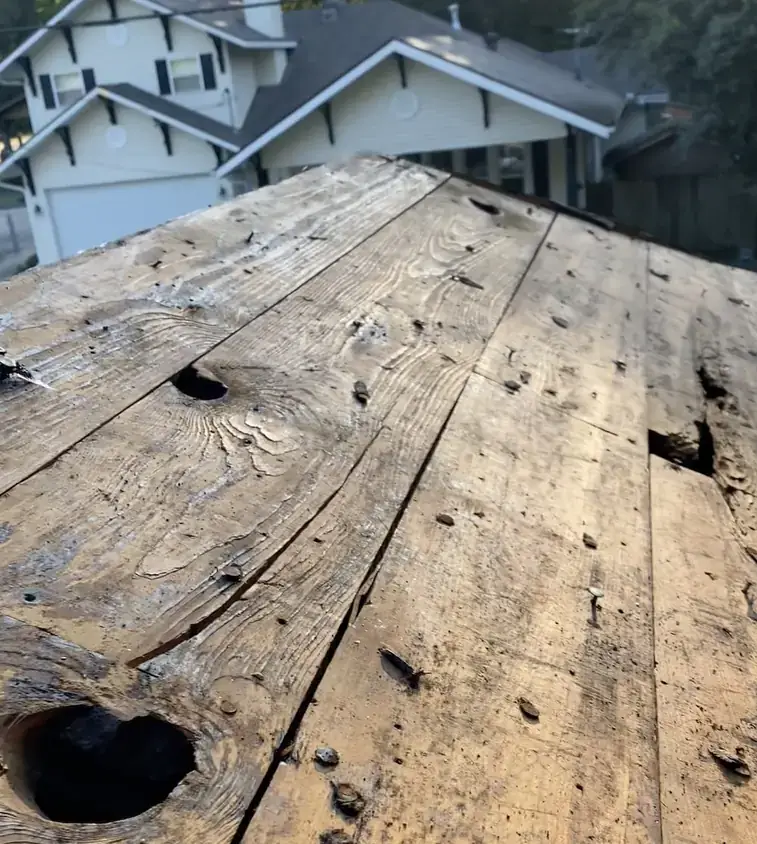
Beneath the shingles is the decking, the wood layer that gives the roof its shape and strength. When a leak runs long enough, the decking soaks, softens and eventually rots. You may spot it from the attic as dark staining, a spongy feel, or daylight through the boards. That's the stage where a repair stops being about shingles and starts being about structure.
Replacing rotted decking is part of doing the job right. Covering soft boards with new shingles hides the problem and lets the rot continue underneath. A roofer who finds damaged decking should show you, ideally with photos, and explain what needs to be replaced before any new roofing goes down. Superior includes addressing structural damage caused by water infiltration in its leak repair work.
Why the stain isn't under the leak
Here's the part that frustrates homeowners. Water entering at a chimney can travel down a rafter, across a ceiling joist, and appear as a stain on the far side of a room. On a low-slope section, it can move sideways along the underlayment before finding a seam. In an attic, it can run along a nail or a pipe and drip somewhere else entirely. The stain marks where the water ended up, not where it came in.
That's why a good inspection looks uphill from the stain. A roofer will check the area directly above, then trace outward: flashing, penetrations, valleys and the slope above. In the attic, they'll look for dark trails, wet insulation and stained wood that point back toward the source. Patching only the roof above the stain is a common reason a leak seems to come back.
Weather plays tricks, too. A leak that only shows up in wind-driven rain points to a different entry than one that appears after a slow, steady soak. Note when it happens: during a storm from a certain direction, after snowmelt, or only on humid days (condensation can mimic a leak). Those clues help narrow the search, and they're worth passing along to whoever inspects the roof.
While you wait for a repair, trace the edge of any ceiling stain with a pencil and date it so you can see whether it's growing. Photograph it. Put a bucket under active drips and move belongings out of the way. Those notes help whoever looks at the roof, and they help with an insurance claim if it comes to that.
If you've found a stain or a drip, Superior Roofing offers free roof inspections with a photo report. Call the Springdale office at (479) 684-6060, Monday through Friday, 8:00 AM to 4:00 PM, and they'll set up a visit to find where the water's coming from.
Superior Roofing, (479) 684-6060
Call (479) 684-6060More articles
What to Do After Hail or Wind Hits Your Northwest Arkansas Roof
The first few days after a storm shape everything that follows, and most of the smart moves happen with both feet on the ground.
How a Roof Insurance Claim Works, Step by Step
Filing a claim for hail or wind damage feels like paperwork you've never done, so here's how the process actually runs.