What to Do After Hail or Wind Hits Your Northwest Arkansas Roof
The first few days after a storm shape everything that follows, and most of the smart moves happen with both feet on the ground.
October 1, 2026 · 4 min read
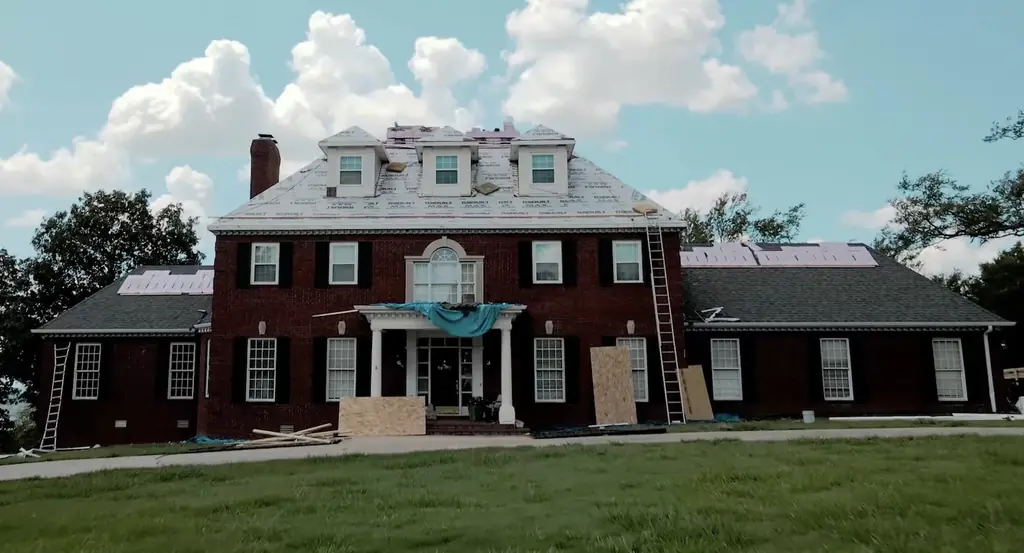
The storm passes, the sky clears, and you're standing in the yard looking up at a roof that seems fine from the ground. That's the tricky part about hail and wind in Northwest Arkansas. Damage is easy to miss from down here, and it can do quiet harm for months before a stain finally shows up on a ceiling. What you do in the first few days matters, and most of it is simple.
Start with safety, from the ground
Walk the property before you do anything else, and keep your eyes up and out. Look for limbs resting on the roofline, power lines that are down or sagging, and anything hanging loose from the eaves. If a tree has come through the roof, or you see a downed line or smell gas, stay clear and call emergency services first. A roofer comes after that, not before.
Then check inside. Go into the attic if you can do it safely, and look at the ceilings and the tops of the walls in every room. Fresh water spots, a drip, or daylight where there shouldn't be any all tell you something got through. Run a flashlight over the underside of the roof decking and look for dark, wet patches. If you find active water, put a bucket under it and move on to the next step.
One firm rule: don't climb onto the roof yourself. Hail knocks the protective granules off shingles, wet surfaces are slick, and a roof that's just been battered may not carry weight the way it did last week. A ladder on soft, wet ground is just as risky. Everything you need to learn right now can be learned from the yard, a window, or the attic.
Document before you touch anything
Photos are the backbone of everything that comes after, so take them early and take plenty. Shoot the whole house from each side, then move in closer. Look for dented gutters, dinged downspouts, bruised siding, dented metal vents and torn window screens. Hail leaves marks on soft metals and paint that are easy to photograph and hard to argue with. Include a wide shot with something in the frame for scale, like a ladder or a fence post.
Write down the date of the storm and what you saw and heard. Note the time if you remember it. If you can pick up a few hailstones safely, photograph them next to a coin or a ruler. Keep receipts for any emergency costs, too. None of this has to be fancy. A phone and a notes app will do the job, and it gives whoever looks at the roof later a clear starting point, which matters if you end up filing an insurance claim.
Stop the water, but keep it temporary
If water is getting in, the goal is to slow it down, not to fix the roof in the middle of a rainstorm. A tarp secured properly over the exposed area is the standard temporary measure, and it's a legitimate part of storm response. A tarp that's tacked down badly can blow off in the next gust or tear shingles loose, so this is one job where it helps to have someone who does it regularly. Superior Roofing lists temporary protection, such as tarping exposed areas, as the first step in how it handles storm damage.
Inside, move furniture out from under any leak and lay down towels or plastic sheeting. Take photos of every wet spot before you wipe it up. Keep your receipts for anything you buy to protect the house, since many insurance policies address reasonable emergency measures. Ask your insurer exactly how yours reads, because policies differ and nobody can answer that for you without seeing the paperwork.
Know when to call for an inspection
Even if you see no leak, it's worth getting the roof looked at after a hard hail or wind event. Damage that doesn't leak today can still wear the roof down faster, because bruised shingles keep shedding granules and cracked seals let moisture work in slowly. A trained inspector can see what you can't from the ground, like lifted shingle tabs, creased wind damage and flashing that's pulled loose around chimneys and vents.
A free inspection is a reasonable first move, and it doesn't commit you to anything. Superior Roofing's inspections look at the condition of the shingles or other roofing material, signs of leaks, water damage and mold, the gutters and drainage, and the flashing around vents and chimneys. You get a detailed written report with photographs and recommendations. Be careful with anyone who knocks on doors after a storm pushing a same-day contract. Ask for a license number, and check it.
Watch the calendar, too. Policies set their own rules about how long you have to report storm damage, and those rules vary, so read yours or call your agent soon rather than waiting to see whether things get worse.
If your roof took a hit and you'd like someone to look at it, Superior Roofing offers free roof inspections with a photo report. Call the Springdale office at (479) 684-6060, Monday through Friday, 8:00 AM to 4:00 PM, and a Project Manager can set up a visit.
Superior Roofing, (479) 684-6060
Call (479) 684-6060More articles
How a Roof Insurance Claim Works, Step by Step
Filing a claim for hail or wind damage feels like paperwork you've never done, so here's how the process actually runs.
Asphalt, Metal or Slate: Choosing a Roof for a Northwest Arkansas Home
Three materials, three different personalities: what each one does well and what to ask before you pick.